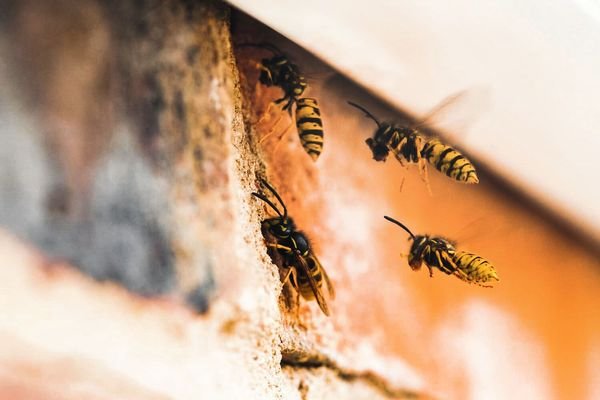
Noticed a large bee hovering near your deck railing, plus a perfectly round hole that wasn't there last spring? That combination usually means carpenter bees, not the fuzzy bumblebees working your garden beds. It's a common call for pest control crews working around Markham, where older deck boards give them exactly the weathered wood they look for.
What Carpenter Bees Actually Do
Carpenter bees are solitary insects that bore into untreated or weathered wood to build a nesting tunnel. The entrance looks almost machine-made, a clean, round hole about the size of a pencil eraser, usually on the underside of a deck board, fascia or eave. Once a tunnel exists, the same insect or its offspring often reuses and extends it the following year, which is how one small hole becomes a longer structural problem over time.
What Bumblebees Actually Do
Bumblebees are social insects, living in colonies rather than alone, and their entire body is covered in dense, fuzzy hair. They nest in the ground, in old rodent burrows, or inside dense grass clumps, almost never in structural wood. A bumblebee buzzing around your deck is probably just visiting nearby flowers, not building anything in the wood itself.
Carpenter Bees vs Bumblebees at a Glance
| Trait | Carpenter Bee | Bumblebee |
|---|---|---|
| Abdomen | Shiny, mostly bald black | Fuzzy and hairy all over |
| Nesting style | Solitary, drills into wood | Social colony, nests in ground |
| Wood damage | Yes, tunnels reused and expanded yearly | None, no interest in wood |
| Sting risk | Low, males can't sting, females rarely do | Low unless the nest is disturbed |
So if the goal is protecting your deck, the species matters a lot. One of them is drilling into it. The other just happens to be nearby.
Why This Keeps Happening on the Same Deck
Untreated, unpainted or weathered wood is the biggest draw. They prefer softwoods like cedar and pine, especially where the surface has already started to grey. Once a tunnel is established, the scent left behind often attracts others to the same board the following season, which is why one hole rarely stays one hole for long.
Spotting the Difference Without Getting Close
You don't need to catch one to tell them apart. Watch where the activity is happening. Bees hovering near bare wood edges, with sawdust-like debris underneath a hole, point to carpenter bees. Bees moving between flowers and a spot in the lawn point to bumblebees, and that activity is worth leaving alone given how valuable they are for pollination. We see this exact pattern repeat every spring across our service areas throughout the GTA, regardless of how old the home is.
What Actually Stops Carpenter Bee Damage
Painting or sealing exposed wood removes the texture they prefer, but existing tunnels still need to be treated directly, since they'll keep using a hole that's already there. Our wasp and stinging insect control service covers this exact scenario, including locating every active tunnel around eaves, decks and sheds, not just the one you noticed.
As the trusted stinging-insect experts for homes across the region, Orented Pest Control treats the wood directly rather than spraying blindly at any insect that flies past, which protects the pollinators you'd rather keep around. If you're not sure which one you're dealing with, request a free inspection and we'll confirm it on-site.
Dealing with a different stinging insect altogether? Browse our full range of pest control services to see what else we cover.